
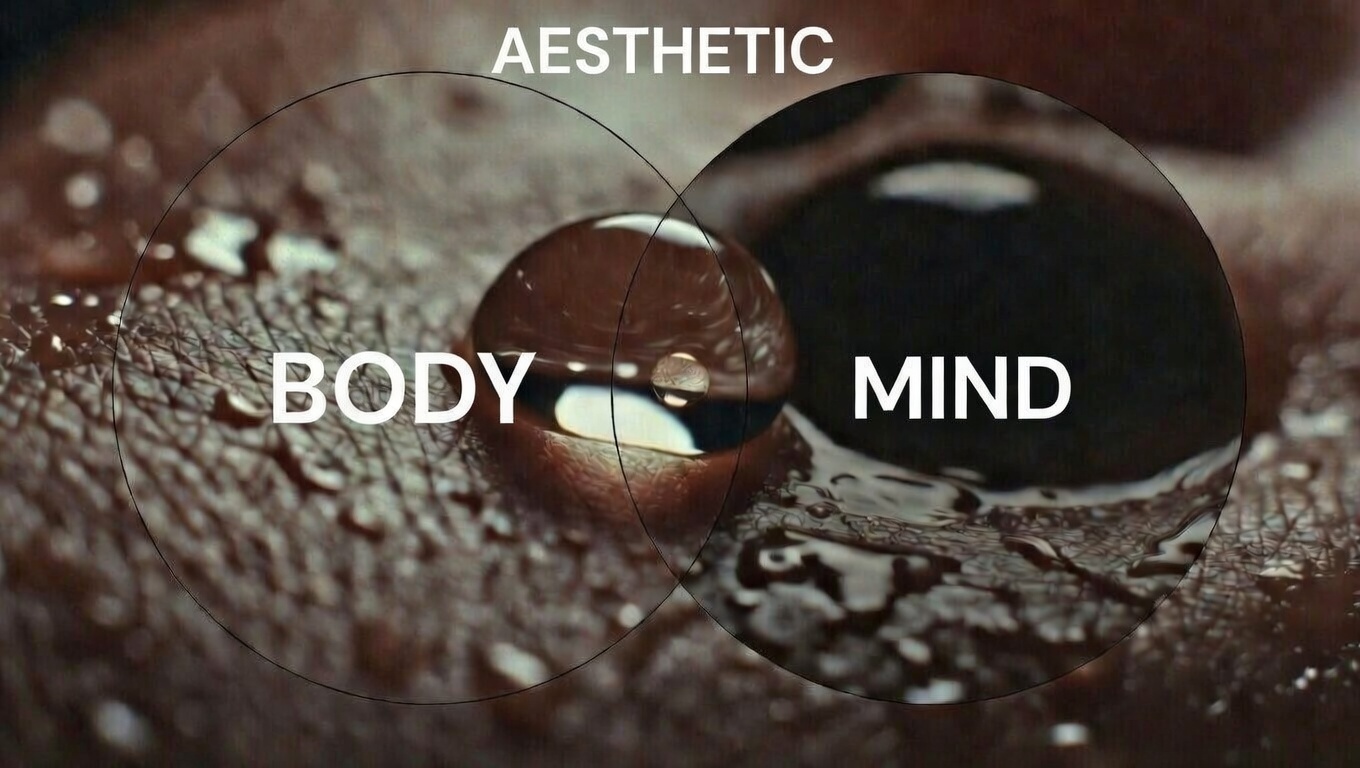
BAM — Body, Aesthetic, Mind
Modern aesthetic medicine is frequently reduced to visible change. A procedure here, a product there — evaluated in isolation, optimized for immediacy. But lasting radiance is not the product of any single intervention. It emerges from the interplay of physical health, tissue and skin structure, and mental clarity.
This is the premise of the BAM Framework: three interconnected pillars that, together, define what sustainable aesthetics actually means.
Body — The Internal Foundation
External appearance is a reflection of internal health. Hormonal balance, micronutrient status, metabolic efficiency, sleep architecture, inflammatory load — these are not peripheral concerns. They are the biological substrate upon which every aesthetic outcome rests.
Without addressing the body's foundational systems, even the most sophisticated surface treatments produce results that are temporary at best and counterproductive at worst.
Aesthetic — Structural Precision
The aesthetic pillar addresses what most people associate with cosmetic medicine: skin quality, facial architecture, volume distribution, symmetry. But within the BAM framework, aesthetic interventions are never performed in isolation. They are informed by the body's current state and calibrated to the patient's individual anatomy.
The goal is not transformation for its own sake, but refinement that respects and enhances what is naturally present.
Mind — Mental Resilience and Self-Perception
The psychological dimension of aesthetics is systematically undervalued. How a patient perceives change, how they relate to their own appearance, how stress and mental health influence skin physiology and aging — these factors determine whether any intervention achieves lasting satisfaction.
A structured approach to mind includes stress management, realistic expectation-setting, and an honest assessment of motivation. Without this, aesthetic medicine risks becoming reactive rather than intentional.
Why Three Pillars, Not One?
Single-pillar approaches produce single-dimension results. A patient who receives excellent skin treatments but ignores metabolic dysfunction will see diminishing returns. A patient with optimal bloodwork but unaddressed psychological distress may never feel the benefit. The pillars are not independent — they are mutually reinforcing.
BAM is not a marketing concept. It is a clinical framework for ensuring that every intervention serves the whole person, not just the presenting concern.
Conclusion
BAM is a philosophy of care, not a product line. Only when physical foundation, structural aesthetics, and mental clarity work in concert does sustainable, natural-looking transformation become possible.
Author: Dr. med. Désirée Grawunder — Licensed Physician, Germany


