
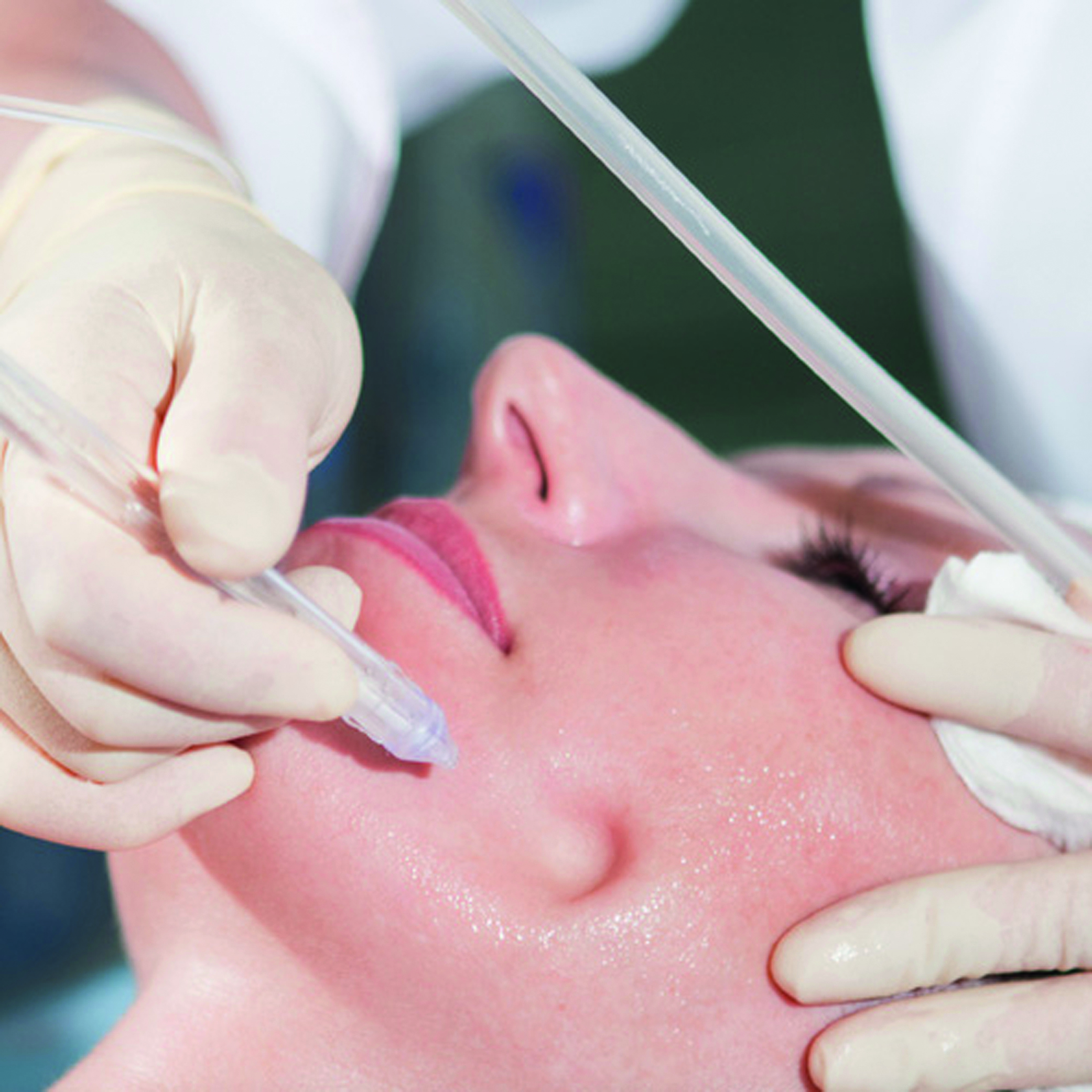
Microneedling and JetPeel — Two Paths to Skin Regeneration
Anyone exploring modern skin regeneration will encounter both microneedling and JetPeel. Both promise improvement in skin texture and quality — yet they operate through entirely different mechanisms.
Microneedling — Controlled Micro-Injury
Microneedling uses fine needles to create precisely calibrated micro-channels in the skin. This controlled injury triggers the body’s wound healing cascade: collagen synthesis increases, elastin production is stimulated, and the skin’s structural matrix undergoes remodeling over the following weeks.
The procedure is particularly effective for textural irregularities, acne scarring, enlarged pores, and fine lines. However, it involves deliberate barrier disruption — meaning downtime, temporary sensitivity, and the requirement for intact healing capacity.
JetPeel — Pressurized Infusion Without Disruption
JetPeel delivers active compounds through a high-pressure jet of micro-droplets that penetrate the skin without needles or mechanical disruption. The skin barrier remains intact, making JetPeel suitable for sensitive skin, reactive conditions, and patients who cannot tolerate downtime.
JetPeel excels at deep hydration, delivering water-soluble active ingredients, and providing immediate luminosity. It is also an excellent complement to other treatments, serving as a vehicle for targeted compound delivery.
Choosing the Right Approach
The deciding factors are not the treatments themselves but the patient’s skin type, current condition, treatment goals, and tolerance for recovery. Robust skin with structural concerns benefits from microneedling’s remodeling capacity. Sensitive or compromised skin responds better to JetPeel’s non-invasive delivery. In many protocols, alternating or combining both produces superior results to either alone.
Conclusion
The method is not what matters most — skin type, condition, goals, and medical assessment are. An individually calibrated treatment plan consistently outperforms any standardized solution.
Author: Dr. med. Désirée Grawunder — Licensed Physician, Germany


